Sakoku in Japan started in the 1630s where basically no one was allowed to leave (and anyone coming back, even if Japanese blown of course in a boat or something, could be put to death).
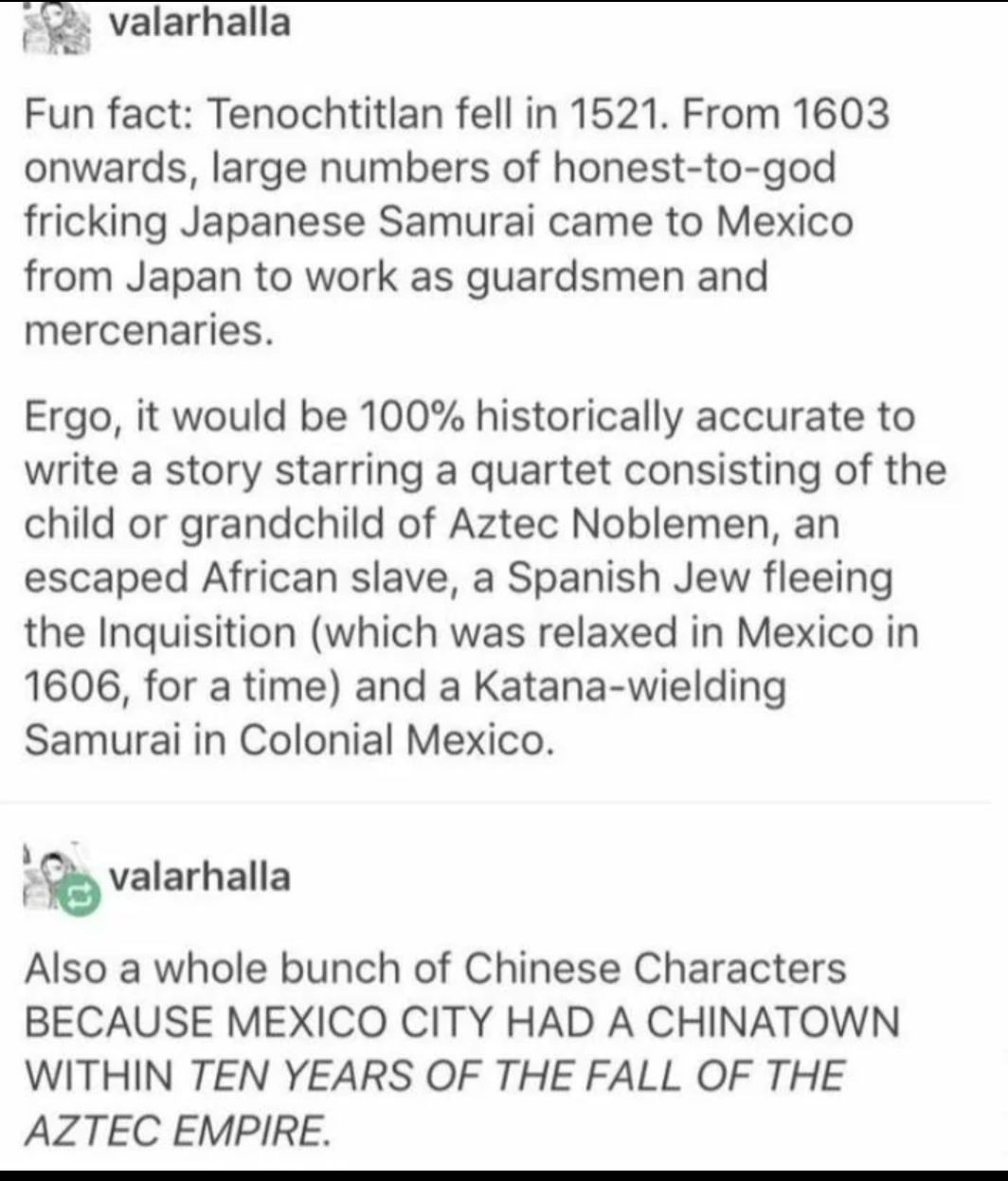
After some poking around, it seems like some Japanese were in New Spain in 1613-1614, but I can’t find anything about mercenaries/guards (especially not large numbers of them). Is there a source?
Until the 1630s, it’s not impossible for that group to exist; that part is fine (though I should also fact-check the katana part since, for a long time, it was bows and maybe even guns by that point).
A well made katana is still going to be a status symbol. They might still keep it for keepsake and for reminding them of home that they cannot return to. And if you have marshal prowess why not be a mercenary? And if you’re in foreign land and they are already using firearms, you have to adapt.

Sakoku in Japan started in the 1630s where basically no one was allowed to leave (and anyone coming back, even if Japanese blown of course in a boat or something, could be put to death).
After some poking around, it seems like some Japanese were in New Spain in 1613-1614, but I can’t find anything about mercenaries/guards (especially not large numbers of them). Is there a source?
You make some interesting points, but I choose to believe a random screen shot.
Until the 1630s, it’s not impossible for that group to exist; that part is fine (though I should also fact-check the katana part since, for a long time, it was bows and maybe even guns by that point).
A well made katana is still going to be a status symbol. They might still keep it for keepsake and for reminding them of home that they cannot return to. And if you have marshal prowess why not be a mercenary? And if you’re in foreign land and they are already using firearms, you have to adapt.
It sounds plausible to me at least.
Portugese firearms were introduced to Japan in 1543 and Samurai used them.
You could have a Samurai with his katana and his heirloom matchlock rifle… in theory.