

History Major. Cripple. Vaguely Left-Wing. In pain and constantly irritable.

Sorry to anyone I didn’t DM goodbye. I sorted people very ‘ad hoc’, and my own spotty focus and memory didn’t help. I recognized a lot of users in my time on here, and most of you I enjoyed very much. I think, in particular, I forgot some Slrpnk users.

Good luck, going forward. o7

  • 161 Posts
  • 278 Comments
Joined 1 year ago
cake
Cake day: March 24th, 2025

help-circle

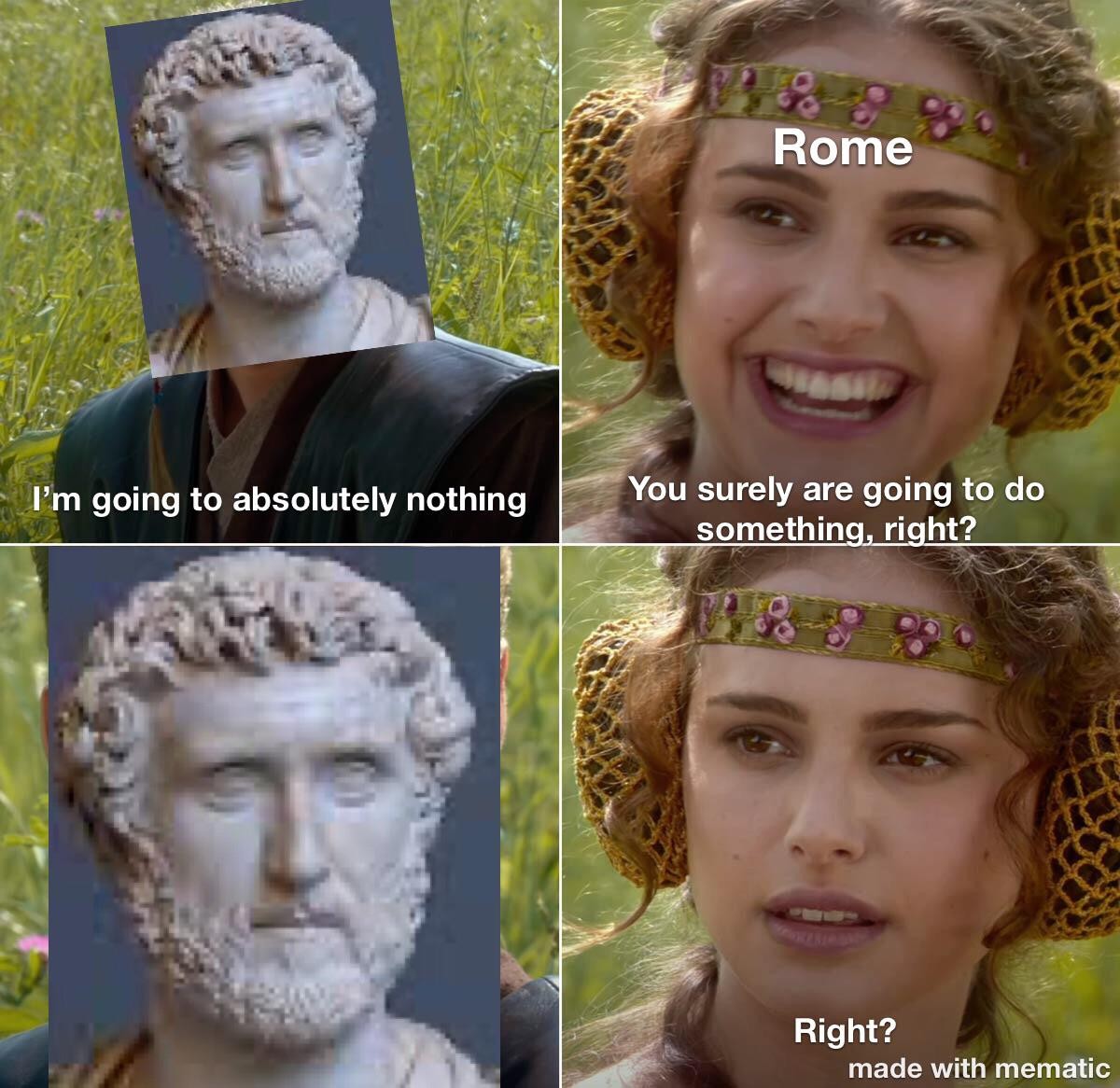
  • Explanation: Antoninus Pius is one of the longer-reigning Emperors of the Roman Empire. Why does no one remember him? Because he did nothing.

    Not literally nothing, but his reign contained little in the way of excitement. No great invasions or defenses, no fundamental reforms in yet another misguided attempt at adulation or military glory, no crisis that was allowed to blossom to such a stage. Just a quiet, diligent man who was noted to enjoy fishing in his down time, keeping a steady hand on the tiller of state. When his ~23 year reign was over, letting the gears of government turn with nothing more than addressing problems and clarifying legal issues as they arose, the Empire looked much as it had when he had inherited it - just with a bit more of everything - charitable organizations, completed infrastructure projects, legal protections, slave rights (but still slavery, because the past is a shitty place), money in the treasury…

    Antoninus Pius did nothing, actively. By inaction, he chose the best possible course of action in his reign. o7

    Wu wei is a Taoist concept Romans were unlikely to have been aware of.



  • PugJesus@piefed.socialOPtoRPGMemes @ttrpg.networkDiplomacee
    link
    fedilink
    English
    arrow-up
    10
    ·
    3 months ago

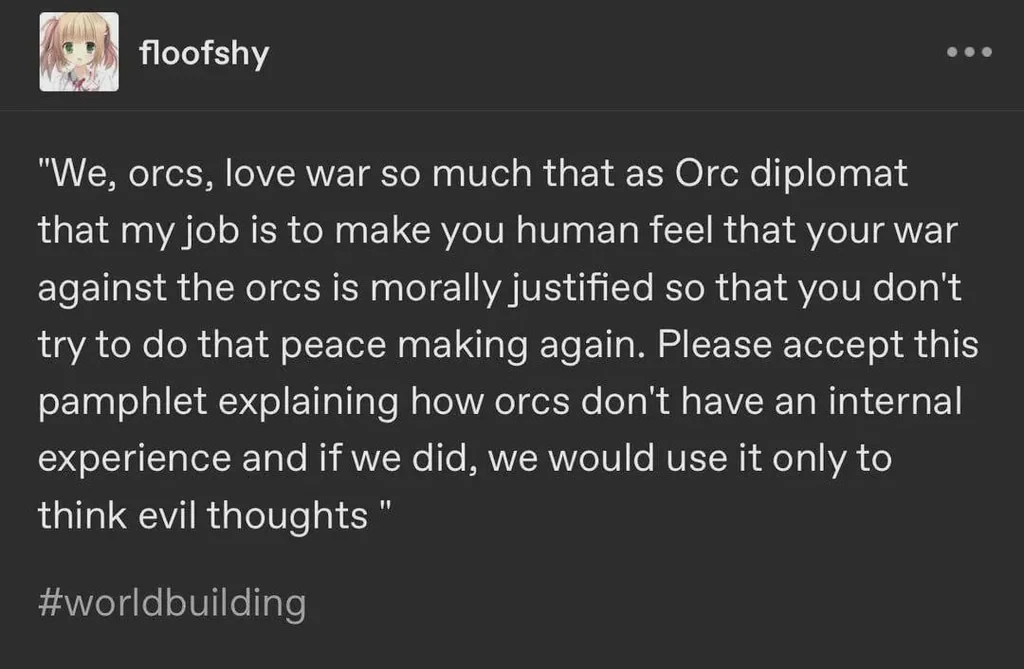
    “They call me the BUTCHER of GORZGNABEL! Do you think it’s because I’m ORDINARY!? Because I’m UNEXCEPTIONAL!? NO! My own kind would prefer to scratch dirt for living - but I alone can drive them before me as an extension of my will! The orcish people have come to know my terror, and submitted to it like cowering dogs - and soon too will the race of man!”


  • Generally, high-quality pieces would have been made by artisans (and thus usually custom), not factory-made. The high demand meant that the skills to make these pieces were more commonly pursued by woodworkers, thus making a larger labor pool (and so, cheaper labor), but the technology available and higher price of resources means that it would have required more expense in the form of materials and more man-hours to create the product.


  • PugJesus@piefed.socialtoMicroblog Memes@lemmy.worldLost in art
    link
    fedilink
    English
    arrow-up
    90
    ·
    3 months ago

    do people know you can pay for custom pieces

    Like, if a door knocker is that important to you, like an upper-middle class 19th century homeowner, you can just… pay 500$ or so for a nice one. I promise you that the 19th century homeowner paid much more for their’s, adjusted for inflation.


  • I know this is the shitposting Lemmy and historical accuracy isn’t the goal here … But you don’t honestly think they put plantations in infertile places and used slaves for no reason right? They made a shit ton of money

    Overall, you’re right, but I’d like to point out two caveats here:

    1. Southern plantation farming was incredibly inefficient and utterly ruined the land it was practiced on - something that was recognized (and criticized) as early as George Washington. So they did build their plantations in fertile areas, but exhausted the soil and did very little to let it recover until George Washington Carver (unrelated) started spreading crop rotations around ~1900.

    2. The aristocrats made a shitton of money relative to the average person, but they were much, much poorer - both individually and as a society - than the industrialized North. Northern farming, even, was much more efficient - but the Southern aristocracy perpetuated their system because control was more important than money. In the slavery (and sharecropping) system, the plantation class effectively ruled little fiefs of dependent ‘free’ farmers and unfree (legally or practically) Black labor, able to exercise wide-reaching control not just economically, but also socially, culturally, and politically. Given the choice between more luxury or more power, they chose more power, and used that power to perpetuate their sickened systems.